


Welcome our new Policy Manager, Trinity Mills!

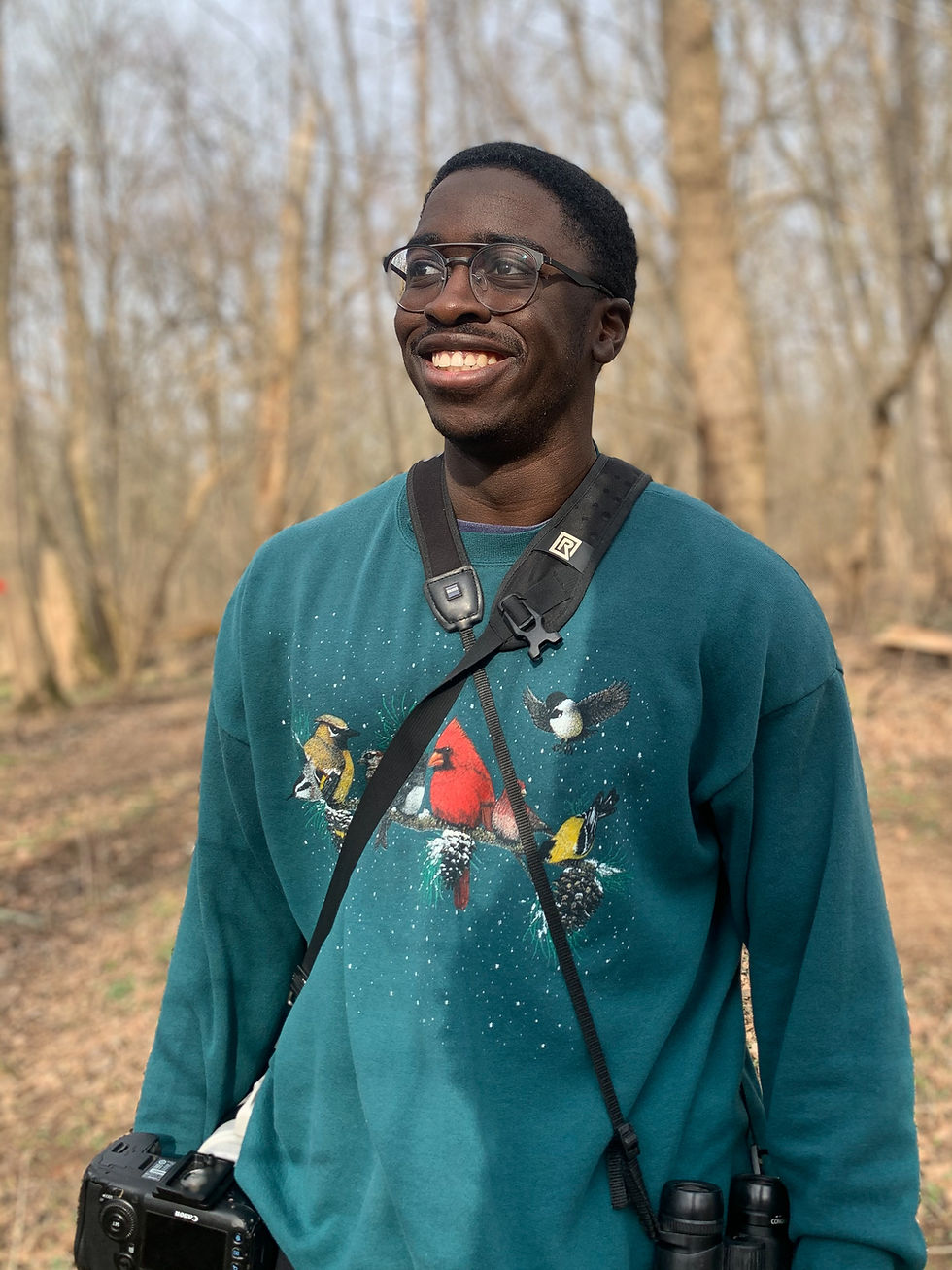
We hope you aren’t tired of interviews yet, because we need to introduce you to our Policy Manager, Trinity Mills! The people have spoken; NVCT needs to take on a bigger role in local and statewide conservation policy efforts, and Trinity is our answer. In this new role, Trinity will attend local meetings, build relationships with local community leaders, and assess how NVCT can leverage our partnerships, knowledge, and voice to ensure nature is heard, seen, and valued by lawmakers. Trinity has developed a career in policy, and outside of career experience, we would certainly say that Trinity is a nature advocate.
Did you grow up in this region? Do you have any nature spots you frequent?
“I’m originally from Moseley, Virginia, about 45 minutes west of Richmond. When I was growing up, it was rural, and today it's more on the outskirts of the suburbs. I remember being out in the woods for the majority of my childhood; the change in landscape due to development is pretty evident. I moved up here in 2022 and have been here for over four years now. I have lived mostly in Fairfax and spent most of my time in Loudoun. The nature exploration that I have done up here has been in little pockets; when I was in Fairfax, I was at Burke Lake a lot. In Loudoun, I was at the Wildfire Sanctuary in the town of Lucketts. It has unique geography and globally rare wetlands, one of my favorite natural gems.”
Tell us about your journey to NVCT?
“I got my undergrad degree at Christopher Newport University in the Hampton Roads area, whereI studied environmental studies. Afterward, I focused on work that dealt with advocating for wildlife, the environment, and the connection we have with those things.”
Trinity pursued this passion, completing a fellowship with the Piedmont Environmental Council, then working as an outreach lead for the Humane Society of the United States before deciding to strengthen her environmental knowledge at George Mason University, acquiring a master's degree in environmental science.

"During this time, I also moved up to Northern Virginia and started working for the Loudoun Wildlife Conservancy. My day-to-day work was helping organize efforts to help citizens shape development policy, learn about the importance of land protection, and work with partners to develop policies in favor of wildlife. My graduate research was looking at public access and public sentiment, alongside political advocacy.”
Can you tell me about how you landed on policy as the sector you would work in?
“It was an interesting journey. When I started learning about the sphere I wanted to work in, I started from a hard science angle. I was automatically put into the deep end of science coursework, which really steered me towards other elements of this world. That pushed me into environmental philosophy and transcendentalism. I explored the connection of people and nature. I want to know what inspires people to take action to protect nature and that connection.”
Transcendentalism sounds spiritual, doesn’t it? In a sense, it is. Transcendentalism is a 19th-century philosophical, spiritual, and literary movement that emphasized humans' connection to nature, based on the belief that nature and humans are inherently good and fundamentally connected.
“I’m definitely inspired by Emerson and Thoreau; much of my graduate research focused on their philosophies and ways of thinking in regard to the natural world.” At a recent staff lunch, she was asked who she would have dinner with if she could have it with anyone in the world, dead or alive. Her pick? Ralph Waldo Emerson.

Much of your background is in wildlife advocacy; how did you land on NVCT, a land trust, as your next career move?
“Wildlife has a large part to play, but the land conservation element is equally as strong. The first work I did in conservation was with AmeriCorps doing invasive species research in Kauai. It taught me the many facets of land conservation. As I went on, I started learning about how wildlife is a wayto bring people into conservation.”
How do you think NVCT will differ from previous positions you have had?
“My work with PEC was remote, so it did feel more encapsulated; I didn’t get the experience of the regionality of the work because I mainly worked from home. With the Wildlife Conservancy, they only worked in Loudoun; the impact was visible to me but not regional. So, I’m excited for a position with the regionality, but also the intimacy and closeness to the community we serve. This will be a good opportunity for me to see things on a wider scale while also experiencing positive change and the impact our work is making. Land conservation doesn’t happen in a vacuum, and I think it’s important to see things in both contexts.”
What does policy work look like for a bigger organization versus a more local one?
“I’m excited to work to further and maintain some of the standing partnerships NVCT has. A lot of the work I did was localized and focused on county government; it will be rewarding to not only be a part of that work but also find ways to enact change on the statewide level. Especially when it comes to land conservation, doing work on a larger scale is going to be important.”
Our work and team continue to grow to meet the needs of Northern Virginia. We anticipate sharing more news about new policy efforts NVCT joins and hope that in the future we can play a role in organizing citizens for advocacy surrounding nature protection. Trinity is just the person to start this work at NVCT!


Comments